Therapy
What therapy can help with
Relationships & identity
Relationship and family difficulties, including
communication challenges
Questions around sex, sexuality, LGBTQIA+ identities, gender
Self-worth, identity, confidence
Emotional wellbeing
Anxiety, worry, panic, phobias
Low mood, depression, exhaustion, loss of direction
Anger, self-harm, impulsive behaviours
Life events & transitions
Bereavement, ageing, major life changes
Work stress, burnout, career change, financial pressure
Body, trauma & long-term health
Trauma, abuse, neglect
Chronic pain, long-term health conditions
Neurodivergence & coping patterns
Autism, ADHD, neurodivergence
Alcohol and drug use, compulsive behaviours
How therapy works
Therapy offers a space to understand yourself more deeply, navigate life's challenges with greater awareness, and develop a more compassionate relationship with yourself. I believe lasting change comes not from fixing who you are, but from understanding yourself more fully.
While life's difficulties are part of being human, they don't have to define you. Together, we'll explore how you relate to those difficulties so that you have more choice, greater resilience, and a stronger sense of yourself.
The ways we think, feel, and relate to others are often shaped by our earlier experiences and relationships. We'll gently uncover these patterns with curiosity rather than judgment, helping you understand where they come from and whether they still serve you.
My role is to balance compassion with honest challenge. I'll offer a space where you feel heard, accepted, and supported, while encouraging you to explore the patterns that may be keeping you stuck, and experiment with new ways of responding.
I also recognise that therapy is a relationship in which I hold responsibility and influence. Consequently, I'm committed to working with openness, humility, regular supervision, and a willingness to hear your feedback.
I believe our experiences are always shaped by our personal, social, and cultural contexts, and I aim to hold these in mind throughout our work together.
Therapy isn't about becoming someone different. It's about becoming more fully yourself - developing greater self-awareness, self-compassion, and freedom to respond to life in ways that feel authentic and meaningful.
What happens next?
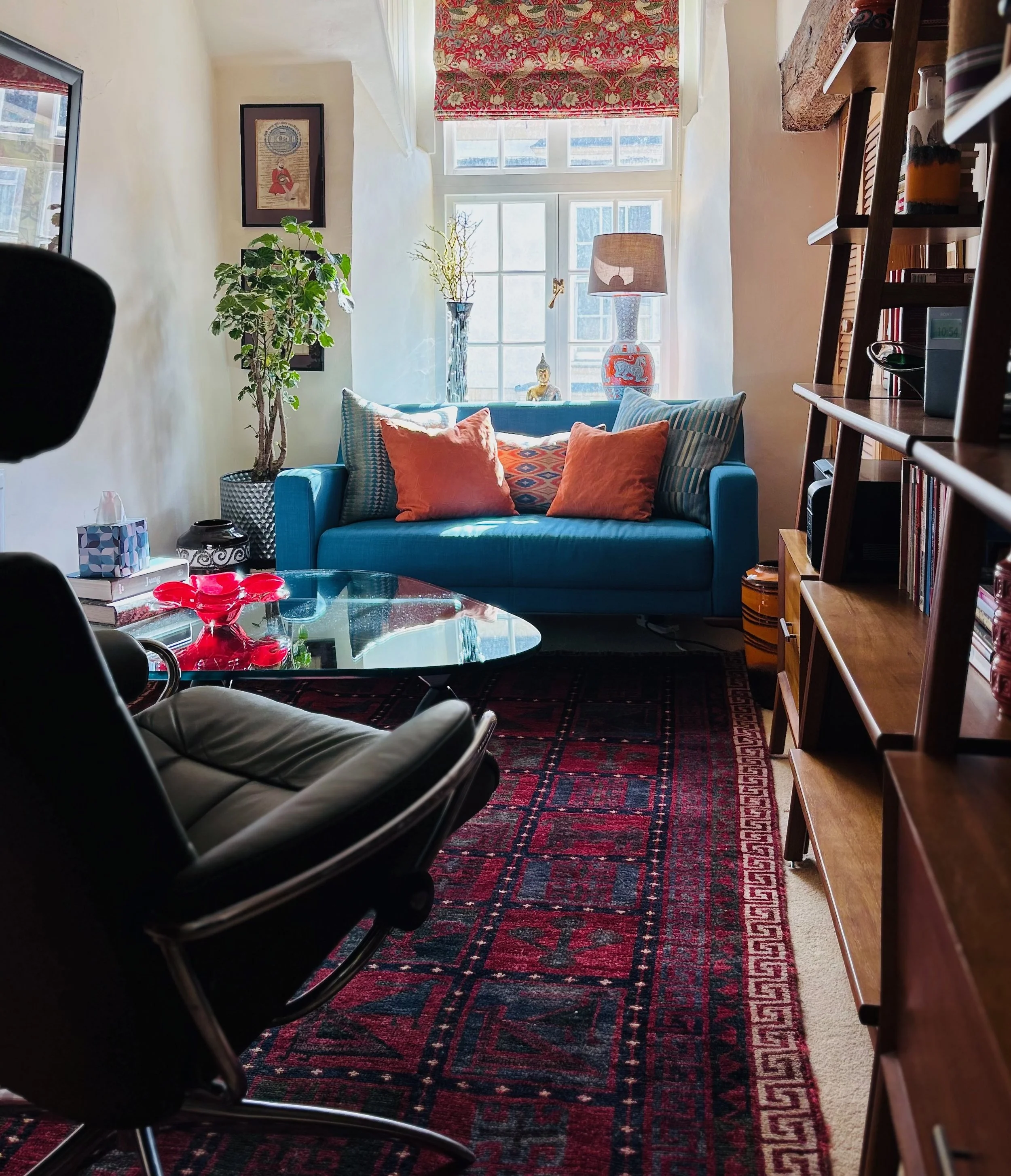
Our first session
Our first session is a chance for us to get to know each other. We’ll talk about what’s brought you to therapy, what you’re hoping for, and any questions you have about the process. There’s no expectation that you need to tell me everything straight away - we’ll go at a pace that feels comfortable for you.
It’s also an opportunity for you to see how it feels to work with me. Finding the right therapist matters, and it’s important that you feel you can talk openly and be yourself. If, at the end of the session, it feels like a good fit for both of us, we’ll arrange a regular weekly day and time to meet.
In-person or online?
I offer in-person sessions in Bruton, Somerset, and online sessions in UK time.
How many sessions?
I usually suggest starting with an initial block of six sessions. Around session five, we’ll review how things are going and decide together whether to continue, pause or work longer-term.
Fees
Sessions are £90 for 50 minutes.
I offer a limited number of reduced-fee spaces for therapy clients on a low income – please feel free to ask.
Book a session
I am currently accepting new in-person and online clients. Please fill in the form with a few details and I’ll get back to you as soon as I can. I appreciate this may be an anxious time for you so I aim to respond within a few days, workload dependent.
“Life is an unanswered question, but let’s still believe in the dignity
and importance of the question.”
Tennessee Williams