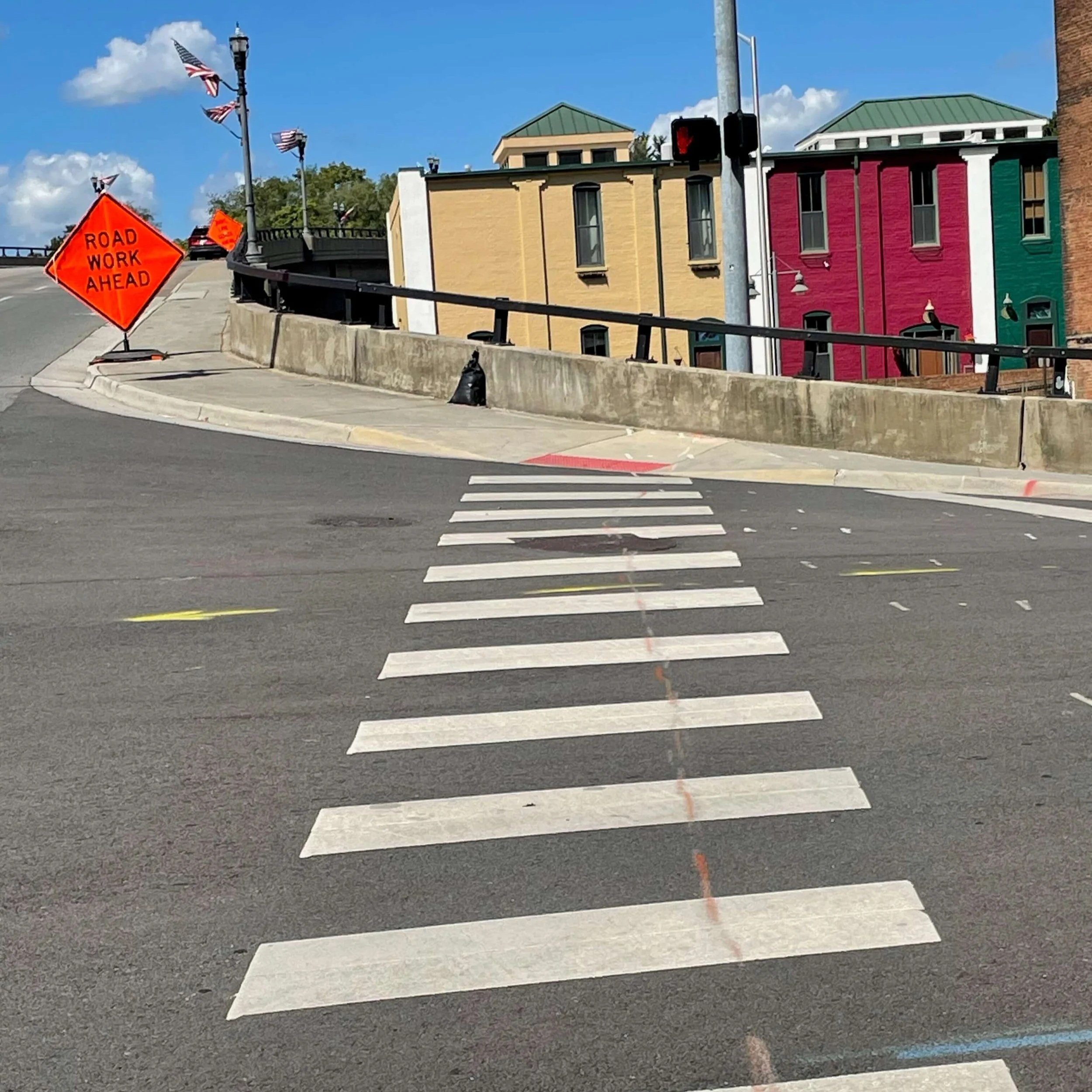
Crossing the threshold
As Benjamin Franklin famously wrote in 1789, ‘In this world, nothing can be said to be certain, except death and taxes.’1 Death may be universal, but taxes are anything but. They reflect political choices about what society values, who should contribute, and which services deserve support rather than penalty.

Stepping in and holding back
During or after a session with a deeply distressed client, I often catch myself thinking, ‘All I did was listen’. I also hear supervisees say the same. In those moments, we forget that listening – giving someone in distress our full attention – is hard. It asks us to sit with suffering and with the difficult feelings it stirs in us, while resisting the urge to move too quickly into offering tools, reassurance, comfort or advice.

Are you a doomer, gloomer, zoomer or bloomer?
Until quite recently, I assumed I would not be someone who had conversations with ChatGPT. When that assumption changed, I was struck by how convincingly human the chatbot’s voice felt, and by how readily I found myself attributing humanness to it. It even feels slightly awkward to refer to this polite, responsive, seemingly attentive presence as an ‘it’.

Suffering is normal
Most clients arrive in therapy wanting relief. They want problems resolved, suffering eased, and a sense that something painful will be ‘fixed’. It is also entirely understandable that there is often a conscious – and sometimes unconscious – expectation that the therapist holds special knowledge, insight, or skill capable of delivering that relief.

Power dynamics
We are living in a world where power is unevenly distributed and continuously negotiated – between the wealthy and the impoverished, the privileged and the disadvantaged, the majority and minority, and between the Global North and Global South. These are not abstract distinctions. They are lived realities, shaping access, opportunity, safety and voice. On the global stage, authoritarian leaders of powerful states exert influence in ways that ripple far beyond their borders, shaping political, economic and environmental conditions for others.

Clients who come to therapy to prove it won’t work
Some years ago, in supervision, when presenting my work with a client I found challenging – someone for whom even an accurate word-by-word mirroring of what they had said, was met with a rebuttal, refusal or complaint that I hadn’t quite got it right – I was taken aback when my supervisor said, ‘Sometimes, clients come to therapy not because they want it to work, but because they want to prove it won’t work.’ So, every attempt to attune to, empathise with, or soothe is rejected – perhaps because to be seen as vulnerable evokes such intolerable shame that the instant unconscious defence must be rageful dismissal.

Trigger warning
I was listening to a radio interview recently in which the speaker, just before describing a traumatic life experience, announced ‘trigger warning’. My initial reaction was to wonder whether this was meant somewhat ironically, given that only a split second separated the warning from the account itself. On reflection, however, it seemed genuinely intended – as a caution for listeners who might find what followed emotionally activating.

Risky business
Ours is a risky business. This may be felt even more acutely by those working in private practice than by colleagues in organisational settings, where systems of support, policies, procedures, and management structures offer a degree of containment. In private practice, much of that containment is absent. We may have supervision, of course, but the clinical responsibility for our clients ultimately rests with us alone.

Power and privilege
In addition to the influence of our families of origin – and the degrees of adversity or good fortune we encounter in childhood – we are shaped by the wider social context into which we are born. Class, race, gender, gender identity, sexual orientation, ability and neurotype all play a part. Whether we grow up in a working-, middle-, or upper-class environment; whether our skin colour aligns with the majority or a minority; whether we are able-bodied or disabled, neurotypical or neurodivergent – these factors, among others, contribute to how we experience the world and how the world responds to us.